
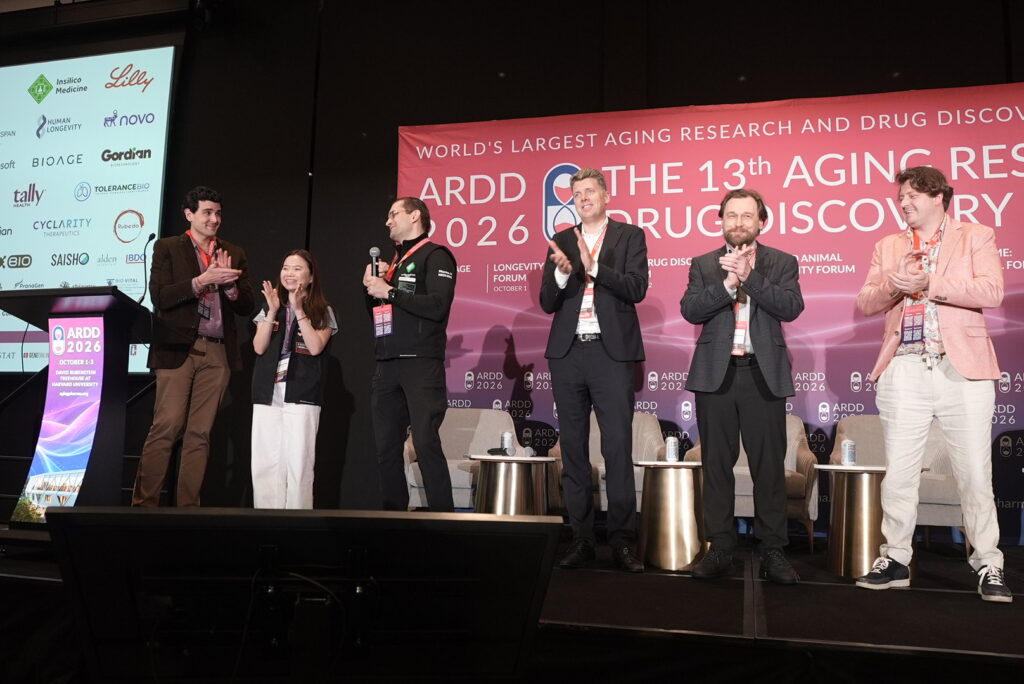
For years, the longevity field has asked the FDA one question: does aging count? On October 1, 2026, it got its clearest answer yet. The answer was not a yes, but it was not a no either.
At the 13th Aging Research and Drug Discovery Meeting (ARDD) at Harvard, four senior FDA officials joined a panel moderated by ARPA-H Program Manager Andrew Brack. FDA Chief Scientist Steven Kozlowski, MD, announced that aging and longevity will be among the topics in the agency’s forthcoming update to its Focus Areas of Regulatory Science (FARS) report. The tentative release target is fiscal year 2027. The room applauded. Social media translated it as “FDA recognizes aging.” The panel said something more specific, and more useful.
What was actually announced
FARS is a high-level document that sets out the research areas the FDA considers most important to its regulatory work. It is not guidance, it is not an approval pathway, and it does not set endpoints. Inclusion means aging is now officially something the agency wants to understand scientifically.
The panel brought together:
- Kozlowski
- Jeffrey Siegel, Director of the Office of Drug Evaluation Sciences at CDER
- Justin Penzenstadler, Acting Associate Director of the Office of Cardiology, Hematology, Endocrinology, and Nephrology (OCHEN)
- Lowell Zeta of the Office of the Commissioner
Kozlowski’s FY2027 target is tentative, and other reports noted that no firm date was given.
What the regulators told the field
Two possible routes. Siegel described two ways to show a treatment affects aging broadly:
- Accumulate evidence that it benefits several age-related conditions.
- Measure decline across multiple physical and mental capacities in a defined population, an approach called intrinsic capacity, and show that the treatment slows it.
Where first trials will likely start. Penzenstadler expects early approval-supporting trials to focus on age-related comorbidities or mortality, in older, higher-risk patients. The reason is benefit versus risk. Treating healthy people for decades for a modest gain is a hard case to make. He added a caveat: a drug that extends survival through its known cardiovascular effects has not thereby shown that it slows aging.
The biomarker standard. Siegel separated two kinds of biomarker:
- A prognostic biomarker predicts future risk.
- A surrogate endpoint must also change with treatment, and that change must reflect real downstream clinical benefit.
Most aging clocks today are prognostic. None has been validated as a surrogate endpoint.
A regulatory address. Penzenstadler identified OCHEN, within CDER’s Office of New Drugs, as the clinical review office responsible for aging as an indication. He encouraged sponsors to submit real protocols through the IND process.
The ask. The panel’s top recommendation was a pre-competitive consortium to build “a cookbook of biomarkers.” Companies would use compatible trial designs so their data can be pooled toward validation.
Why this matters
Until now, a company developing a therapy aimed at aging had no defined review office and no stated evidence framework. Now it has:
- a named office
- two candidate evidence models
- an explicit bar for when a biomarker becomes an endpoint
That is the genuinely new part: the agency described what it would need to see.
Several existing efforts already fit this map:
- The proposed TAME trial of metformin is the multi-disease model.
- XPRIZE Healthspan is the functional model. It measures muscle, cognition, and immune function. It awarded $1M milestone prizes to ten finalist teams on August 11, and its finalists run clinical trials from 2026 to 2029.
- The Biomarkers of Aging Consortium is the closest existing answer to the FDA’s call for collaboration.
What this doesn’t show
The FDA has not recognized aging as an indication. A place in FARS is a research priority, not a pathway to approval.
Nothing binding was issued. There is no new guidance, no endpoint, and no approval standard, and the release timeline is tentative.
Biomarkers are not yet endpoints. A biological-age reading that moves is not evidence of clinical benefit until it is validated as one.
The burden of proof sits with the field. Harvard Medical School Dean George Daley opened the same meeting by warning that some optimistic claims about aging go beyond what the biology currently supports.
The distinction that matters
A place on the agenda is not a pathway. What ARDD delivered is a map: where to submit, what kind of evidence counts, and what the field has to build together.
GLA’s standard doesn’t change with the size of the applause. This is the most concrete regulatory signal longevity medicine has received. Any claim that an FDA-approved “anti-aging” therapy is near remains premature until the FARS document is published and the first aging-focused trials report results.
Presenting Partner at the GLA Longevity Summit: iPeace
GLA is proud to feature iPeace as a Presenting Partner at the November 19 Global Longevity Summit at Mar-a-Lago.
Who they are. iPeace is a Palo Alto-based manufacturer of clinical-grade induced pluripotent stem cells (iPSCs), with its manufacturing base in Japan. Its cell manufacturing facility is cGMP-certified and listed on the FDA’s drug establishment registration site. Its manufacturing process is also filed in an FDA Drug Master File.
The founder. iPeace was founded in 2015 by Dr. Koji Tanabe. He trained in Shinya Yamanaka’s laboratory at Kyoto University and was second author on the paper reporting the world’s first human iPS cell line. Yamanaka received the 2012 Nobel Prize for showing that adult cells can be reprogrammed to a pluripotent state. That discovery is what makes iPSC medicine possible.
What they offer. iPeace supplies GMP-grade iPSCs to pharmaceutical and cell-therapy developers. It also offers a personal iPSC banking service, My Peace, which produces and cryopreserves an individual’s own iPS cells for potential future use.
What it means for members:
- For clinicians: personal iPSC banking is a preservation strategy, not a treatment. It positions a patient to benefit if iPSC-derived therapies mature, and those are being tested in clinical trials worldwide but are not yet approved for longevity use. Understanding the distinction prepares you for patient questions that are already arriving.
- For investors: iPeace combines Nobel-lineage science, FDA-registered GMP infrastructure, and a direct-to-consumer banking model, alongside its business supplying cells to drug and cell-therapy developers.
iPeace leadership will present at the November 19 Summit. Registered attendees will have direct access to this conversation.
→ iPeace: ipeace.com/en
→ Summit and partnership inquiries: info@globallongevityassociation.org, with “iPeace” in the subject line
Free Resource: CME-Accredited Longevity Medicine Education
GLA partners with Longevity Education Hub, a non-profit initiative offering free, CME-accredited courses built by MDs, PhDs, and geroscience researchers.
- Longevity Medicine 101: for physicians new to the field.
- Longevity Medicine 201: for advanced practitioners. It covers theories of aging, biomarkers, molecular mechanisms, and geroprotector regimens. It is approved for up to 3.5 AMA PRA Category 1 Credits™ through ACCME joint providership with the Medical Society of Delaware.
- Investing in Longevity Course: for investors and executives evaluating the longevity market.
All courses are CME-accredited and 100% free.
→ Start learning: longevity-degree.teachable.com
→ Longevity Medicine 201: longevity-degree.teachable.com/p/longevity-medicine-201
Resources Worth Bookmarking
GLA Members Only · Curated funding, research, and tools
ARPA-H: Advanced Research Projects Agency for Health
Federal Funding · Warm Pathway
ARPA-H is HHS’s high-risk, high-reward health research agency, funded at $1.5 billion a year. Funding is program-manager driven.
Outside its specific programs, ARPA-H accepts project ideas on a rolling basis through each Mission Office. The required first step is a short Solution Summary, and you need ARPA-H’s written feedback before submitting a full proposal. Engaging the right program manager early matters, and GLA can facilitate introductions.
- Proactive Health Office (Director: Glen Coppersmith) focuses on prevention: reducing the likelihood that people become patients. Program managers include Andrew Brack, Yoram Vodovotz, Jessica Green, Scott Gorman, Nathaniel Mohatt, and David Gunning.
- Health Science Futures Office (Director: Gene Civillico) focuses on removing the scientific and technological barriers to future health care. Program managers include Jean Hebert, Daria Fedyukina, Mansoor Khan, Ryan Spitler, and Kimberley Steele.
→ People directory: arpa-h.gov/about/people
→ Open funding opportunities: arpa-h.gov/explore-funding/open-funding-opportunities
→ Small business (SBIR/STTR), with no open calls at the moment: arpa-h.gov/explore-funding/sbir
→ Partnering with ARPA-H: arpa-h.gov/about/partnering
→ Weekly “Vitals” newsletter, which lists new funding announcements: subscribe at arpa-h.gov
→ GLA’s OWH Ambassador support: info@globallongevityassociation.org, subject “OWH Grant”
Biomarkers of Aging Consortium
Scientific Consortium · Warm Pathway
The pre-competitive collaboration the FDA just called for already exists. The consortium spans more than 50 institutions and works on standardized, clinically validated ways to measure aging.
Its programs include:
- the Biomarkers of Aging Challenge
- The Longevity Study
- Biolearn, its open-source platform for aging-biomarker analysis
Its fourth annual conference ran October 5–6 at Harvard Medical School. Conference co-chair Mahdi Moqri, PhD, is in active conversation with GLA about scientific advisory participation. That makes this a warm pathway.
→ Consortium website: agingconsortium.org
→ Get involved: community@agingconsortium.org
→ GLA warm intro to Dr. Moqri: info@globallongevityassociation.org, subject “Biomarkers Consortium”
Apollo: B2B Research & Contact Intelligence
Operational Tool · GLA Uses This
Apollo is a contact-intelligence platform: verified emails, company data, and outreach sequencing. Members can use it to:
- find ARPA-H program-manager contacts
- verify researcher emails before cold outreach
- build prospect lists from conference speaker rosters
It has a free plan. Paid plans start at $49 per user per month billed annually, or $59 month-to-month. GLA’s own outreach team uses Apollo for its major campaigns.
→ Explore Apollo: apollo.io
Florida Cancer Innovation Fund, FY 2026–27
State Grant · Florida Members
The Florida Department of Health’s Casey DeSantis Cancer Research Program has $70 million available this cycle. The fund supports cancer research and treatment models designed to show measurable impact within a 12-month funding period.
Priorities include clinical trials, cancer prevention, nutrition-based prevention, and repurposing generic drugs. That makes it a direct fit for members in preventive oncology, metabolic health, and lifestyle medicine.
- Eligible: Florida-based institutions only. Funded work generally must take place in Florida.
- Remaining deadlines: November 6 and December 18, 2026, at 11:59 PM ET. The September 25 round has closed.
→ Program page: floridahealth.gov, Florida Cancer Innovation Fund
→ FY 2026–27 Funding Opportunity Announcement (PDF): FY-26-27-Florida-Cancer-Innovation-Fund-FOA.pdf
→ Applicant Q&A (PDF): 2026-27-FCIF-Questions-Answers.pdf
Sources cited in this article:
- Lifespan.io: FDA Leaders Name Longevity a Priority at ARDD
- BioSpace: I Peace partners with CIRM
- BioSpace: I Peace EGG system release
- BioSpectrum Asia: Interview with Dr Koji Tanabe
- Yespress: I Peace profile
- Longevity Education Hub: Longevity Medicine 201
- Longevity Education Hub home
- ARPA-H: Our People
- ARPA-H: Open Funding Opportunities
- CRS: NIH Funding FY1996–FY2026
- Lifespan.io: Biomarkers of Aging Conference
- Lifespan.io: Global Leaders in Geroscience Convene
- Landbase: Apollo pricing 2026
- Hackceleration: Apollo.io pricing
- Florida DOH: FY 2026–27 FOA
- OncoDaily: FCIF 2026–27 deadlines
- Florida DOH: FY2025–26 nutrition focus
- XPRIZE: 10 Finalist Teams Awarded $1M