
Global Longevity Association

News

Scientists Reversed 60 Years of Cellular Aging. Here’s What It Really Means

A team in Bonn turned an 80-year-old’s blood cells into neural stem cells with a molecular age under 20. The headlines call it age reversal. Here is what the result shows, what it does not, and where the field goes next. In October, researchers at the University Hospital of Bonn, the University of Bonn and […]

Scientists Reversed 60 Years of Cellular Aging. Here’s What It Really Means Read More »
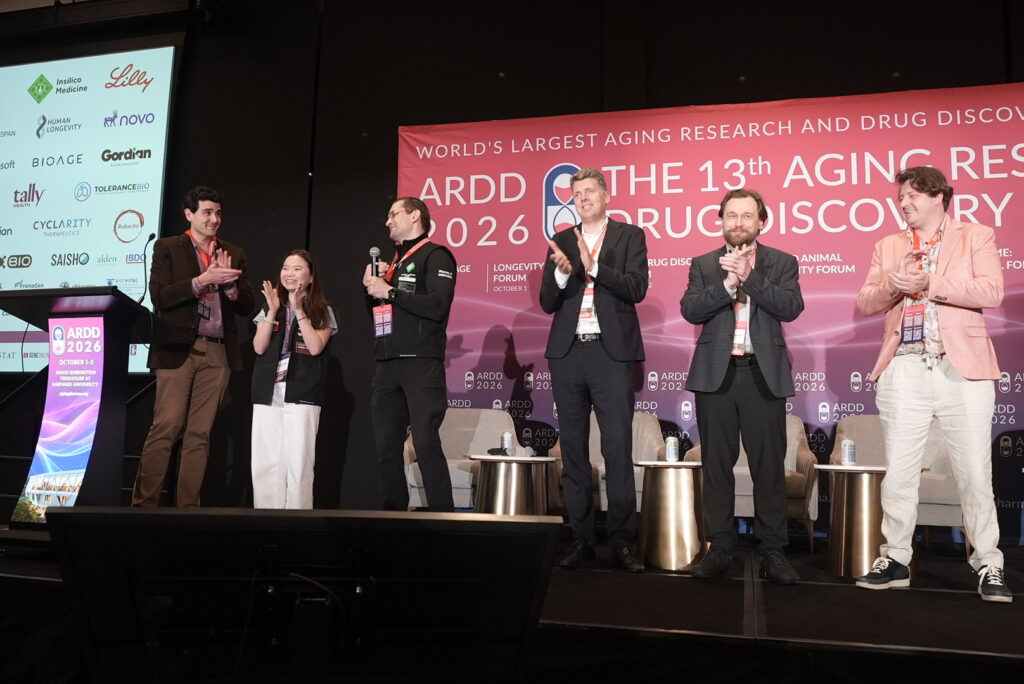
The FDA Just Put Aging on Its Science Agenda. Here’s What That “Historic Shift” Actually Means

For years, the longevity field has asked the FDA one question: does aging count? On October 1, 2026, it got its clearest answer yet. The answer was not a yes, but it was not a no either. At the 13th Aging Research and Drug Discovery Meeting (ARDD) at Harvard, four senior FDA officials joined a

The FDA Just Put Aging on Its Science Agenda. Here’s What That “Historic Shift” Actually Means Read More »

An AI Designed a Drug From Scratch. Here’s What Its “Biological Age Reversal” Data Actually Shows

Generative AI just cleared a bar no drug candidate has cleared before it. On September 7, 2026, Insilico Medicine published a study in Nature Biotechnology showing that rentosertib — the first drug ever discovered and designed end-to-end by generative AI — produced a consistent, measurable shift toward younger predicted biological age across six independently developed

An AI Designed a Drug From Scratch. Here’s What Its “Biological Age Reversal” Data Actually Shows Read More »

The FDA Just Voted on Peptides. Here’s What the Vote Actually Means

  The longevity industry is moving fast. On July 23–24, 2026, the FDA’s Pharmacy Compounding Advisory Committee (PCAC) voted to recommend six peptides — BPC-157, KPV, TB-500, MOTS-c, epitalon, and Semax — for addition to the 503A Bulk Drug Substances list, the roster of ingredients licensed compounding pharmacies may legally prepare against a prescription. A

The FDA Just Voted on Peptides. Here’s What the Vote Actually Means Read More »